Showing posts with label Magdalene Laundries. Show all posts

Monday, September 17, 2018

Call off the blimp!

The Donald Trump 'blimp' is not coming to Ireland after all 


Let’s call off the blimp, because Mr President is not coming after all.

Well, not yet, at any rate!

It has been amazing to hear so many people in Ireland express regret that President Trump has postponed (or cancelled) his Irish visit this coming November.

They were so fired up that many said they were looking forward to joining a political protest for the first time.

Irish protesters had to reach out to their counterparts in the UK, who turned out in their thousands to make the President feel so unwelcome when he visited London back in July.

Sorry, they said, we won’t need to ship the giant orange “baby blimp” to Ireland after all!

People in Dublin were really looking forward to the sight of a giant baby Donald in a nappy floating across the skyline.

And a hugely successful crowdfunding campaign had already covered the cost of bringing over the six metre high blimp within days of being set up.

Everyone, it seemed, wanted to be part of mass protests against the US President. The sense of anti-climax was palpable as soon as the White House announced that he had postponed his travel plans.

The leaders of two opposition parties, Labour and the Greens, had come  together to announce plans for a joint rally for “democracy, decency, and international solidarity” in Dublin.

As though such concepts, so alien to Mr Trump, were plentiful across the political spectrum here in Ireland.

Labour Party leader Brendan Howlin went as far as to say that President Trump was “no friend of democracy or human rights”.

Mr Howlin said it was important to stand up to Trump on issues such as climate change, the treatment of migrant and asylum-seekers, spending on arms, and the slashing of aid budgets.

In Galway, the local anti-racism group wanted hundreds of people to gather to spell out the words “Feck off Trump” (with a little Irish humour, from the ‘Father Ted’ TV series) on a beach.

In much different times, President John Fitzgerald Kennedy addressed 50,000 people in Eyre Square and the city authorities renamed it as Kennedy Park in his honour.

We are unlikely to see a ‘Trump Park’ in Galway any time in this millennium.

So many Irish people wanted to protest against Trump in November


So many people are disappointed that the street protests are off. They wanted to convey a firm message that Trump’s policies have no place in a modern, prosperous, outward-looking Ireland.

They want to reject the anti-immigrant rhetoric on an island where emigration provided the only refuge for the afflicted through much of the 19th and 20th centuries.

The street protests are off . . . as though there was nothing to protest about closer to home.

The economy might be in recovery, but the recovery does not seem to have reached so many Irish people who are struggling to keep a roof over their heads.

Last week, masked thugs – protected by masked Gardai – used heavy-handed tactics to evict homelessness campaigners from an empty building in Dublin.


Marcing in solidarity with homelessness campaigners
in Galway city centre last week


The sight of masked policemen with no identification on their uniforms caused consternation at a time when there are almost 10,000 people living in emergency accommodation across Ireland.

And now our Minister for Justice says he would support moves to criminalise the photographing of Gardai as they carry out their duties.

Such a move would be an attack on press freedom and should lead to questions as to what the Gardai have to hide.

Would that mean banning photos of public events such as GAA games or the annual Macnas Parade?

The last time I checked such measures were only being considered in states such as Israel, where an oppressive occupation force has a vested interest in covering up its crimes in the West Bank.

Given recent Irish history, we don’t have to cross the Atlantic in search of police forces who abuse their power. In fact the filming of protests has helped to prevent injustice from occurring.

So, instead of worrying about Trump, perhaps we should be looking at how power is being abused much closer to home.

Children sleeping in a Garda Station in Dublin


Last month, a photo of homeless children sleeping in a Garda Station went viral. The youngsters had to sleep on hard chairs in the police station because there was nowhere else for them to go.

The distraught mother who took that photo could soon be guilty of a crime.

Last week, a photo of a sick and distressed 92-year old woman sitting on a chair in a public hospital Emergency Department went viral.

Gladys Cummins posted the photo on Facebook out of frustration and despair. Her mother did not even have a trolley, as she spent 25 hours sitting on that chair.

Two months ago, I saw a 93-year old family member spent 48 hours on a trolley in the ED Department in Galway. The unacceptable has become acceptable and lengthy waiting lists in our public hospitals have become the new norm.

In a supposedly “socialised” health service – compared to the US at any rate – the old and the weak are being forced to spend days lying in corridors in overcrowded facilities.

But Irish people are not taking to the streets to protest about our health crisis.

In June, Irish people became outraged by the images of child migrants on the US-Mexico border crying in distress after being separated from their families. They were outraged by Trump.

Yet few of them have much awareness of the hardships endured by those who spend up to seven or eight years in Ireland’s own Direct Provision system.


A protest against Direct Provision in Dublin


About 5,000 asylum-seekers are detained at 31 accommodation centres without permission to work, or even to cook for their children. Among them are 2,000 children, growing up in highly inappropriate shared spaces with adults from a variety of countries.

Direct Provision centres have been described as the Magdalene Laundries and Mother and Baby Homes of our times. Some even see them as a "time bomb" for future problems to come.

We have British politicians steamrolling headlong towards Brexit, with little or no awareness that their dangerous language is threatening the peace process which transformed life in Northern Ireland over the past 20 years.

We have the families of victims of loyalist collusion who are shocked that a former member of the Royal Ulster Constabulary is now at the helm of the Irish Gardai.

They believe he has questions to ask about their long search for justice for atrocities such as the Miami Showband Massacre and the Dublin and Monaghan bombings.

We rant against Trump for his sexism, at a time when Irish society has been convulsed by a cervical smear test scandal in which the Irish Government treated Irish women appallingly this year.

A lot of Irish people are disappointed that they won’t get a chance to protest against President Trump, but let’s not pretend that we don’t have some pressing problems much closer to home.


Would you like to advertise on this blog? Please email ciaran@ciarantierney.com if you would like to find out more! 

Ciaran Tierney is a journalist, blogger, and digital storyteller, based in Galway, Ireland. Find him at http://ciarantierney.com/


Tuesday, August 14, 2018

Pope Francis and the long lost innocence of the Irish

Protests are planned for the visit of Pope Francis to Ireland this month


In far more innocent times, as children, we got up at the crack of dawn. I remember the excitement in the family home, as we arose and prepared for the biggest and most symbolic walk of our young lives. I still recall the folded deck chairs, the home-made sandwiches and flasks of tea, the yellow and white flags.

At the house, the looks of envy on the faces of the younger siblings and the two grandmothers, who were not old enough or able to join the mass exodus on foot to the racecourse on the other side of the city.

We met up with the cousins, seeing the sense of adventure in their eyes, and the adults around us gave us a sense of what a huge moment this was in our shared history.

There were thousands upon thousands at the racecourse, corralled into zones at the biggest event I had ever seen. This was bigger, even, than an All-Ireland final and a ripple of excitement went through the crowd as the helicopter landed near the grandstand.

And, then, the immortal words . . .

“Young people of Ireland, I love you!”

This was Ballybrit, Galway, in 1979. It felt like a moment of triumph for Catholic Ireland and I could see its significance in the eyes of my parents as they told me how wonderful it was that Pope John Paul II had come to our town.

Our generation of children even became known as the “Pope’s children” after that day in Ballybrit but, looking back almost four decades on, it now looks like the end of an era rather than the start of something wonderful and new.

It actually seems unbelievable now that 79% of the Irish people went along to welcome Pope John Paul II to our land 39 years ago.

Up on the altar in Galway, Pope John Paul II was flanked by two Irish clerics, Bishop Eamonn Casey and Fr Michael Cleary, both of whom it would later transpire had fathered children in the years prior to that memorable day in Galway.

As many people have pointed out since, their indiscretions paled into significance in the context of so much criminal abuse which has been uncovered in recent years.

So much has changed.

It dawns on me now that my family and I walked past the Magdalene Laundry in Galway in order to make our way to Ballybrit to hear the pontiff express his love for us. Only nobody ever talked about the young women who were incarcerated inside, washing the bed linen for the “great and the good” of our city.

As children, we never heard anything about the 10,000 women and girls who were locked up in Magdalene Laundries across Ireland from 1922 to 1996. Yes, it’s still shocking to think that these prisons for “fallen women” remained in place until well into the 1990s.

It dawns on me now, too, that so many of my generation were being abused at the time of the last papal visit, because nobody questioned those in authority and certainly not members of the Catholic Church who had so much control over our daily lives.

In any Irish family, it was considered an honour to be an altar-boy. In 1979, if a young woman became pregnant outside marriage a priest could still arrive at the front door of the family home to whisk her away to a life of imprisonment. Such was the shame.

We did not question those in authority and we had never even heard of child abuse or peadophilia in 1979.


A beautiful tribute to the 'Tuam Babies' in Galway.
What a pity the Bon  Secours have never faced up to this terrible wrong


It dawns on me now that it would take another 35 years before we heard about the 796 ‘Tuam Babies’, dumped in unmarked graves less than an hour up the road from where the Pontiff expressed his love for all the young people of Ireland in Galway.

We were never told about the women and children who were imprisoned in that now notorious Tuam home until 1961. I guess the lives of those children didn’t matter because they were ‘guilty’ of being born outside marriage in a far more judgmental Ireland.

As Ireland prepares to welcome Pope Francis next week, it dawns on me now that the Church he leads has done so much harm to my people, destroyed so many lives, and that so little has been done to make amends.

Doubtless, there were children in Ballybrit that afternoon who are no longer with us, because the pain and trauma of what they endured at the hands of the Irish clergy was far too much to endure. For many, death and self-destruction was the only answer to the pain.

So many Irish families were torn apart by clerical abuse, their pain magnified by the response of church authorities who moved abusers around from one parish or part of the country to another rather than helping to find justice for the victims.

So many people were labelled as “illegitimate” or less than human, so many young mothers had children taken from them against their will, perhaps for adoption by “good Catholic families” in the United States, because unmarried mothers were too stigmatised to be allowed bring them up here in Ireland.

So many of us now see the Catholic Church as an international organisation which ignored, facilitated, and covered up the abuse of Irish children that it’s hard to imagine how enthusiastically we welcomed a former Pontiff back in 1979.

Were we really so innocent? So naive? Did people really have no idea that such terrible crimes were taking place at the time?

We now know that a comprehensive report found that the church authorities responded to clerical abuse with “denial, arrogance, and cover-up” nine years ago.

In the interim, what has changed? Why won't Pope Francis meet the victims and acknowledge how much pain his church has caused to generations of Irish people?


Catherine Corless: she uncovered the truth about the 'Tuam Babies'
despite the best efforts of the Catholic Church


We now know that the Bon Secours order stonewalled or ignored the victims and families of the “Tuam Babies” when they sought the truth or some semblance of justice for their 796 loved-ones.

They are still refusing to engage with the families in 2018, a year after the research of historian Catherine Corless has been completely vindicated by the Irish Government.

We know that up to 140 Irish children were abused by just one priest in Northern Ireland, Fr Brendan Smyth, who was free to travel throughout the land (and continue to abuse) even though the most senior cleric in Ireland was aware of allegations against him.

Had action been taken, how many shattered lives might have been saved?


Preparing for the Pope's visit in Dublin

We have found out about so many shocking cases of abuse, cover-up, and denial involving Irish women, children, and men at the hands of members of the Roman Catholic Church that it seems we cannot be shocked any more.

It’s because of the clear litany of scandals they have endured that Irish people have changed immeasurably since 1979. In the intervening years we have legalised homosexuality, divorce, marriage equality, and abortion, despite strong opposition from a church which seemed to dominate all aspects of our lives back then.

Now people want the Catholic Church to be removed from our schools and hospitals and they want full and meaningful apologies for all the hurt caused and lives destroyed.

When Pope Francis speaks to thousands of people in the Phoenix Park in Dublin on Sunday, August 26, hundreds of others will assemble at silent vigils in places such as Tuam and Dublin.

All they want is acknowledgement of the truth and the terrible damage caused to so many innocent Irish people by the Roman Catholic Church.

As a child, I took part in the longest walk of my young life to see Pope John Paul II in 1979. Like so many others, I was innocent, joyful, and enthusiastic that the head of our global church proclaimed his love for me and all the young children of Ireland.

Almost four decades on, all that innocence has died. I would far prefer to attend one of the protests, to stand side-by-side with the amazing victims, than celebrate the visit of the figurehead of an international organisation which has always seemed far more interested in protecting its own power than the welfare of Irish children.

The innocent victims have found their voices and Pope Francis is missing out on a powerful opportunity to atone for a terrible past if he refuses to meet them, hear their stories, and apologise.

Those of us who are of a certain age may have walked in our thousands to Dublin, Galway, Knock and Drogheda in 1979, but Ireland is a very different place right now and people are no longer willing to accept the blatant abuse of power.

Decades of abuse and cover-ups won’t be wiped out by protests, but it is so important that Pope Francis and the entire Catholic Church is reminded of the damage done.

Those who have been abused will stand together in solidarity at the Garden of Remembrance in Dublin on Sunday, August 26, and at the site of the Tuam Mother and Baby Home.

That to me will be a far more powerful ceremony than trying to regain the long lost innocence of 1979 and a ‘Catholic’ Ireland which has long since vanished.


Would you like to advertise HERE? This blog has been read over 374,000 times since I set it up and YOU could be part of it for a small fee. Contact Ciaran at ciaran@ciarantierney.com for details. 


Ciaran Tierney is a journalist, blogger, and digital storyteller, based in Galway, Ireland. Find him on Facebook at http://facebook.com/ciarantierneymedia

To hire a journalist or a blogger for your business, please check out http://ciarantierney.com/


Find Ciaran Tierney Digital Storyteller on Twitter, https://twitter.com/ciarantierney


Remember the 796 'Tuam Babies' and how difficult it is
for their families to find justice in 2018. 


Tuesday, June 19, 2018

Victims vow to protest when Pope Francis visits Ireland

Catherine Corless' brave research told the world about
the scandal of the 796 'Tuam Babies'


The only surprise about the revelation that survivors of institutions and clerical sex abuse are planning to protest during the visit of Pope Francis to Ireland in August is that anybody might be surprised.

There are thousands of people across Ireland, the UK, the USA, and Canada who are waking up to the injustice inflicted upon them and their families. They are determined not to be silenced anymore.

They want the Catholic Church to face up to the abuse inflicted on young mothers and their children in both Magdalene Laundries and Mother and Baby Homes throughout much of the 20th century. As far as many of them are concerned, the religious orders have never faced up to their crimes.

All across Ireland, hundreds of people believe they may have uncles, aunts, brothers, or sisters scattered across the globe.

They believe they have close relatives in cities such as Boston, Chicago, or New York who have no idea of their own true identities, as they were adopted out, illegally and for cash, by nuns whose only concern was that they ended up in good Catholic homes.

The history of Catholic institutions in Ireland in the 20th century is one of physical and emotional abuse, shame, judgement, and even baby trafficking and child abduction, as many “illegitimate” children were forcibly taken from their traumatised mothers after they were transferred to institutions all across the country. 

This is not ancient history, as we saw in the emotional but wonderful scenes in Dublin two weeks ago when more than 200 former residents of Magdalene Laundries were honoured in public for the first time. 

Many of them flew home from the US and the UK, because the shame of their incarceration – or giving birth outside marriage – ensured they could never return to the towns or villages they came from.

The last Magdalene Laundry only closed down in 1996. Some of the women were so institutionalised after spending three decades in these harsh institutions that they did not wish to leave even when presented with the opportunity to do so. They had given up the will to live independent lives.

The youngest woman to have given birth in a laundry is still only 40 years old. These are real, living, breathing people and now they want the truth – and justice – after so many years of secrets, lies, and shame.

The children born in these horrible places did not all end up living in Ireland. They were trafficked in their hundreds to the USA, their birth records falsified, and to this day many do not even realise that they were adopted or born in Ireland.                                     


When we talk about the 796 ‘Tuam Babies’ we should remember that they are not just skeletons buried in and around a septic tank in a North Galway Mother and Baby Home.

They are the flesh and blood of people like Peter Mulryan, a noble man in his 70s who wants to know what became of the little sister he never knew he had for most of his adult life. 

Until he finds proof of her death, for all he knows Peter’s younger sibling could be living out her life somewhere in North America, totally oblivious to her roots or where she came from.


This need to know the truth seems to be of hugely important to the survivors and their children as they reach old age.  Who would not want to know what happened to a sibling if he or she was forcibly removed from a tearful mother’s arms? 

Even if they knew nothing about them for most of their lives.

Birth records were falsified, an order which ran a notorious Mother and Baby home is now making money from private health care, and religious orders are refusing to hand over records until they receive legal indemnity for crimes committed in the past.

Institutions circumvented the rules to send children out for adoption and priests were moved around from one parish to another when ordinary people raised concerns about clerical sex abuse. For many victims and their families, peace will only come when they hear full apologies and they receive redress for the crimes which destroyed so many lives.


'My Name Is Bridget' is an important new book which
looks at the search for justice and truth by the families


Most of all, people just want to hear the truth. 

It’s a theme which recurs again and again in ‘My Name is Bridget’, the new book by journalist Alison O’Reilly which examines the desperately sad case of a woman who had two sons taken from her in the Mother and Baby Home.

Bridget went on to live in Dublin, marry a good man, and have a daughter who never knew about the two older siblings who were seized from her mother in Tuam. It was only after Bridget died that Anna discovered she had two missing brothers, who may or may not be buried in that infamous septic tank in Co Galway.

Right now, Anna, Peter, and other survivors of the Tuam Mother and Baby Home are waiting on tenterhooks to see if Galway County Council are prepared to undertake a full excavation and examination of the Tuam site. 

They will be shocked and dismayed if they authorities try in any way to cover up what happened in Tuam after all the pain they endured. Decades may have passed, but they are still entitled to find out what happened to close family members – were they buried in an unmarked grave or were they trafficked to America?

“This is a national scandal, not a popularity contest for who wants the tidiest cover-up. This can’t be the same as in the 1970s. How dare you,” wrote Anna in a letter to the Minister for Children and Youth Affairs, Katherine Zappone.

She sent copies of the letter to every member of Galway County Council to make it clear that she and other family members would not accept any kind of ‘cover up’ at the site.

Alison’s book is a very topical addition to the national debate. It shows how important identity is to the adopted and the truth is to survivors of institutions and their families.

In a powerful chapter at the end of her book, entitled Snapshots of Stolen Lives, Alison spoke to a number of survivors about their need to find the truth, justice, and peace.


Honouring the Tuam Babies at a beautiful ceremony in Galway. 


“Everyone deserves to know who they are and it should not have taken this long and I should never have had to fight so hard,” said Breda Tuite, who was adopted through the St Patrick’s Guild Agency in Dublin in 1959. 

It took Breda, from Dublin, years to track down her late mother from Co Kerry. For her, there was a kind of healing in visiting her grave and meeting her friends and family.

Sharon McGuigan was just 16-years old, an innocent child, and had been groomed by an older man when she became pregnant in 1985. She was admitted to the Dunboyne Mother and Baby Home in County Meath and gave birth to a daughter in February 1986. 

The daughter was taken from her and adopted. Sharon had no say in the matter. Her daughter is still not ready to meet her but Sharon hopes to build a relationship with her some day.

“We should not have been made to feel so shamed and to be cast aside,” Sharon told Alison O’Reilly. “I just want to tell my story and not to be mistreated because of something that wasn’t my fault. I want an acknowledgement of what happened to women like me.”

Anna Corrigan has described the Tuam grave as a jigsaw which needs to be put back together.
The survivors and their families point out that there were many institutions like Tuam all over Ireland and an awful lot of healing still has to take place for those who had no voice for far too long.

They believe that religious orders were engaged in criminal behaviour during the darkest days of 20th century Ireland and it is time the Catholic Church faces up to issues such as the shaming of pregnant women, child abductions, and the trafficking of Irish babies to the USA.

They believe that the visit of Pope Francis to Ireland will be a pivotal moment for the Catholic Church on the island.

If he listens to the people who had their identities stolen or who were separated from their families, a huge amount of healing can occur in August. 


Otherwise, Pope Francis can expect very vocal – and hugely embarrassing - protests from victims who are not prepared to be silenced any more. 

 * 'My Name is Bridget' by Alison O'Reilly is available in all good bookshops now. http://www.gillbooks.ie/


Read my recent feature for Irish Central about Rachel Robinson, the quiet-spoken woman who set up the Solidarity for the Magdalenes page on Facebook: https://www.irishcentral.com/news/magdalene-survivors-support

To hire a journalist, blogger, or digital storyteller, contact Ciaran Tierney via his website, http://ciarantierney.com/

Find Ciaran on Facebook: http://facebook.com/ciarantierneymedia/

Follow Ciaran on Twitter: https://twitter.com/ciarantierney


Peter Mulryan at his mother's grave in Galway
Photo: Ciaran Tierney Digital Storyteller

Wednesday, May 9, 2018

Is it time to stop punishing tragedy?


On the daytime radio show in which the host gets paid almost €500,000 per year to hear the concerns of the ‘plain people’ of Ireland, I heard a middle-aged man proclaim his total opposition to the repeal of the Eighth Amendment this week.

If his daughter became pregnant because of rape, he told the host, he sincerely hoped she would choose to keep the child rather than go through with an abortion.

A few weeks earlier, in a vast hall, I heard a woman tell an audience of about 400 people that the act of giving birth “heals the effect of rape”.

She called on the people at the Save the Eighth campaign launch in the West of Ireland to stop rape from happening rather than kill an unborn child.

She didn’t explain how that could be done.

At the same event, a woman told me that the proposed legislation for unrestricted abortion would bring a culture of ‘social’ abortion to Ireland.

I was shocked.                                                      
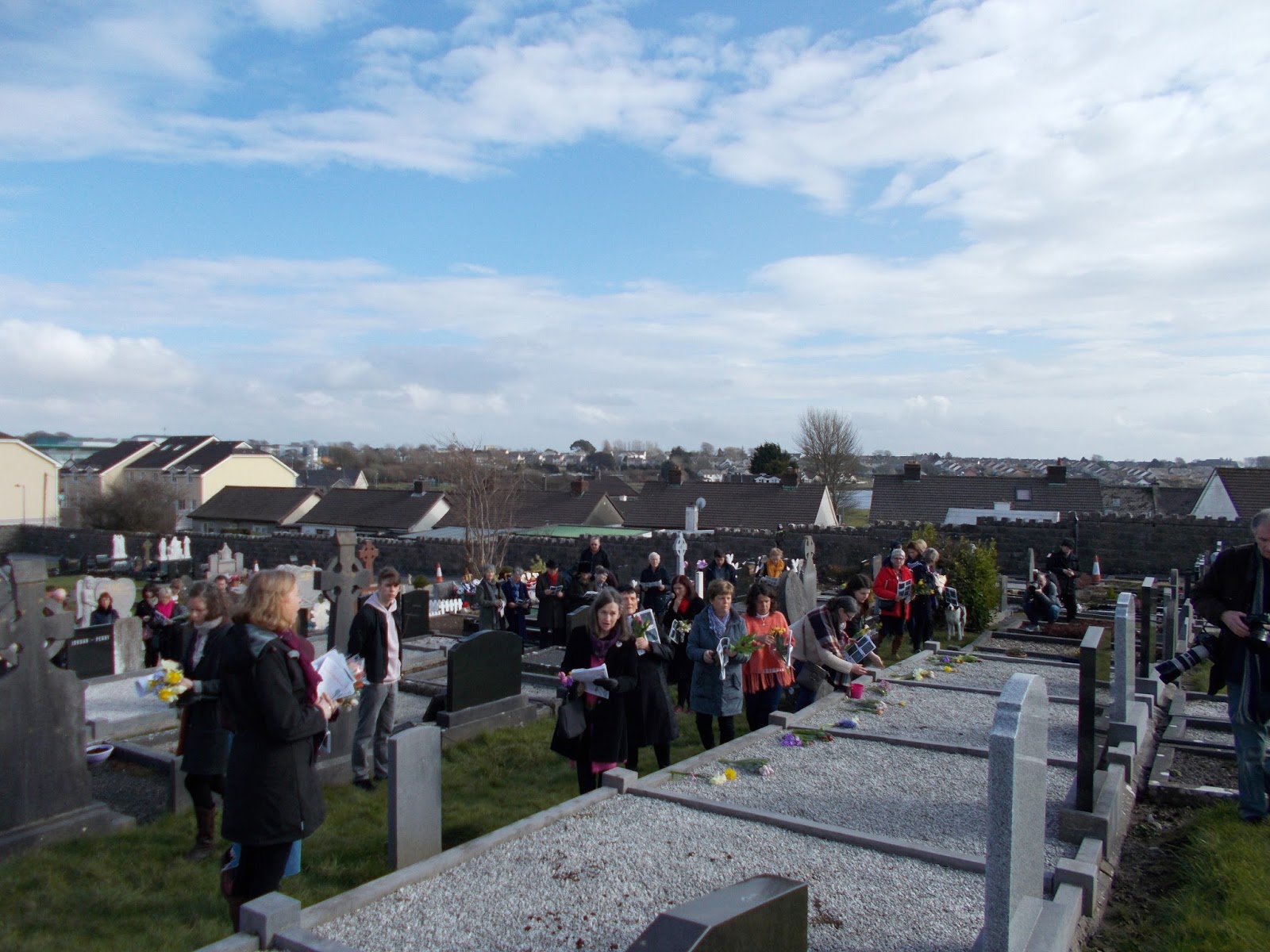
Laying flowers at the graves of the Magdalene Laundry women
in the heart of Galway City. Photo by Ciaran Tierney


She made it sound as though some women decided to have abortions in the same way as they decide what make-up to wear or what club to go to on a Saturday night.

This deeply personal issue is not something that is discussed much, if ever, among my circle of friends. But I am pretty sure that no woman I know has ever opted to have a ‘social abortion’, given the trauma, the heartbreak, the soul-searching, the sense of loss, and the secrecy involved.

There is the fear of confiding in an Irish doctor, given the very real threat of facing 14 years’ imprisonment, or of taking pills in secret, without any guidance or medical support because of the stigma – in fact the criminalisation – involved.

There is no doubt that people I have spoken to in recent months on the ‘No’ side have sincerely held views, and that they believe right is on their side.

And many people share their concerns.

But I live in the city where Savita Halappanvar lost her life at just 31 years of age. The young woman in distress, who was found to be miscarrying, died of blood poisoning after doctors declined to terminate her 17-week long pregnancy.

“This is a Catholic country,” she was told at University Hospital Galway, a comment which made headlines all across the globe and shamed huge swathes of the Irish population.

Regardless of whether or not Savita’s life could have been saved, she was shown an appalling lack of compassion in a country which has a long and shameful history when it comes to how it treats its women.

Every October, Savita is remembered at a candlelight vigil in the heart of my city. The overwhelming feelings are of sadness and shame, sadness that a beautiful young woman lost her life in Galway and shame that she was treated in such a way.


The late Savita Halappanvar is remembered with a
candlelight vigil in Galway each October. RIP.

 
The candlelight vigil takes place in Eyre Square, just five minutes away from the Magdalene Laundry where women were locked up for decades. There is such raw emotion, sadness, and pain when a small group of people gather to honour the women of the laundry each February.

The speeches at Bohermore remind us of how Irish women have been discriminated against, shamed, and mistreated for decades.

I also live in the same county as the Tuam Mother and Baby Home, another place which made headlines all over the world in recent years.

It could be argued that the way in which the bodies of 796 dead bodies were discarded around a septic tank has nothing to do with Ireland’s current abortion debate.

But at the moment I am reading Alison O’Reilly’s harrowing new book, ‘My Name is Bridget’, which looks at how a young woman called Bridget Dolan was incarcerated against her will for the terrible ‘crime’ of expecting a baby outside marriage.

As Alison puts it, she was “following in the footsteps of more than a century’s worth of lost souls” when her family sent her in such shame to the Tuam home.

In those days, unmarried mothers could be named and shamed by priests from the altars of Catholic Churches throughout Ireland.

Their families were quick to judge and to bring them to the grim institutions where they were shown no love as they struggled to survive.

Catherine Corless won a People of the Year award after
uncovering the gross injustice at the Tuam Home


“The mothers-to-be were generally sent into the Home either by their doctor or parish priest or their family, normally arriving at the forbidding front door around a month before they gave birth. When their time came, they were offered no pain relief during labour, another facet of their punishment,” wrote Alison.

Nothing to do with abortion, you might say, but a grim reminder of our nation’s shame in the not-so-distant past.

For the children of these women, it was impossible to leave this stigma and shame behind.

“You were just a bastard in their eyes . . . We were nothing but a kind of scum, you weren’t normal because you didn’t belong to a wedded family. It is totally crazy,” said one survivor last year.


Tuam Home survivor Peter Mulryan at his mother's grave.
She was locked up in the Magdalene Laundry in Galway. 


This afternoon I undertook a walking tour of Galway with a group of female foreign language students. The issue of the referendum came up when they asked about the posters on lamp-posts and all of them were shocked when they heard that a woman could face 14 years in prison for having an abortion in Ireland.

Two of them had seen social media images of a ‘pro-life’ street procession in Limerick City at the weekend, in which young girls dressed in their First Communion dresses marched behind a car which was blaring out The Rosary from loudspeakers.

They found those images “totally crazy”.

A few weeks ago, I met a brave woman called Arlette who is a member of a group called Terminations for Medical Reasons (TFMR).

Arlette is not the kind of woman to get up on a soapbox, but her life was changed utterly when she was diagnosed with a case of fatal foetal abnormality six years ago.

After being told that her baby was going to die, she was then told that nothing could be done for her in Ireland. Her only options were to travel to another country or to go full-term.

She spoke of the agony she went through, the sadness and loneliness of her journey to Liverpool, and how she travelled home by boat because she could not face the ‘plane.

Then she found out there were hundreds of other women like her, women who were forced to travel to the UK or to carry a baby which had no chance of life full-term.

And her pain and sorrow turned to anger, prompting her to set up TFMR with other women who had dealt with the same injustice.               
Arlette Lyons of TFMR speaking in Galway

One of her colleagues, Tracey, has spoken of the devastation of being surrounded by revellers enjoying a weekend away on her short flight to Liverpool on St Patrick’s weekend.

She was 22 weeks pregnant when she found out that little Grace was terminally ill, with a condition which would ensure she would die of respiratory failure upon birth.

“I couldn’t bare this happening to my baby,” she says.

“I spent four weeks nodding along to people’s excited questions. I was slowly losing my mind. I had to go somewhere where they understood what me and my baby were going through.”

The slogan of TFMR is to “stop punishing tragedy”.

Women in the terrible situation faced by Arlette and Tracey should not have to deal with the shame and trauma of having to leave their friends, family, and familiar faces behind after being given such devastating news.

Abortion already is a reality in Ireland, but women facing such a tough, life-changing decision are being forced to travel to the UK or Europe for terminations or take illegal pills in secret at home.

Those who have been raped, sexually abused, or are carrying foetuses with no chance of life deserve so much more than being criminalised, with the threat of 14 years in prison.

It’s time to put an end to Ireland’s culture of shaming women and brushing issues under the carpet, whether by locking up young women in Mother and Baby Homes or condemning them to secret and lonely trips to England.

We can put that shame behind us – and stop punishing tragedy – by voting ‘Yes’ on May 25.


 Ciaran Tierney is a journalist, blogger, and digital storyteller, based in Galway, Ireland. Find him on Facebook at http://www.facebook.com/ciarantierneymedia/

To hire a blogger for YOUR website, check out http;//ciarantierney.com/


Wednesday, March 28, 2018

Is it time for Pope Francis to apologise to the Irish people?

Remembering the Magdalene Laundry women with flowers

At an estimated cost of €20 million to the Irish people, the visit of Pope Francis to Ireland in August promises to be a very different affair from the emotional 1979 tour in which Pope John Paul II seemed to capture the hearts and minds of a generation.

Given how poorly the Vatican has dealt with a litany of scandals involving the Roman Catholic Church in Ireland, many people are now beginning to ask whether the current pontiff has a duty to offer a full apology to the Irish people.

Who should he meet and what should he say during his August visit to the island?

The Catholic Archbishop of Dublin, Diarmuid Martin, has told the Irish media that he would like to visit a prison during his August trip.

“He’d like to go to a prison,” Archbishop Martin said last December. “Everywhere he goes, he goes to a prison.”

The Papal visit looks set to be a pivotal moment for the Catholic Church, recovering lost trust after years of scandals involving clerical sex abuse, the enslavement of women in Magdalene Laundries and Mother and Baby Homes, and the imprisonment of children in industrial schools, in conjunction with the Irish State.

It is going to be a very different affair from the joyous 1979 tour of the country by Pope John Paul II when, as youngsters, we walked for miles in our thousands for huge communal celebrations in places like Galway Racecourse, Knock Shrine, and the Phoenix Park.

Those massive communal gatherings almost four decades ago took place in a different, far more innocent Ireland, in which the voices of victims had yet to emerge and so many appalling secrets were hidden away from public view.

A million people attended the Papal Mass at the Phoenix Park in Dublin and 250,000 of us got up at dawn to hear John Paul II profess his love for the youth of Ireland in Galway.

If Pope Francis is looking for a prison, we had more than one type here in Ireland.

Peter Mulryan at the grave his late mother shares
with other women from the Magdalene Laundry


Many of us who walked across Galway City for the huge gathering at Ballybrit would have passed by the Magdalene Laundry in the city centre, oblivious to the fact that young, middle aged, and older women were incarcerated inside.

Some of them spent three or four decades as slaves in this effective prison, just metres from Eyre Square and the pubs and shops in the heart of the city.

When Pope John Paul said “I love you” to the young people of Ireland the Magdalene Laundries were still in business, their vans driving around the cities and towns, picking up the dirty linen of the great and the good all over Ireland.

The Galway laundry only ceased operating as a business in 1984 and, as thousands walked to Ballybrit, the innocent Catholic children of the city had no idea of the hardships, the despair, and the loneliness hidden away behind those city centre walls.

It would be nice to think that Pope Francis, during his time in Ireland, would meet some of the women who were locked up behind those walls and those of many other laundries for so-called ‘fallen women’ across the land.

Such as Angela Fahy, a frail woman who walks with the aid of a stick now, who reminded us of the terrible cruelty of the place during an emotional memorial ceremony to remember the women who died inside the Galway laundry last month.

She reminded us of the terrible shame placed on Irish women for the ‘crime’ of having babies outside marriage, right up to the 1980s, or the way in which families and the State colluded with the Church to lock these innocent women away for decades.

Angela made it clear that it was not just the Church which was to blame.

She remembered one girl who managed to persuade a workman to sneak a letter out to her sister in Salthill, only for her sister to report her to the nuns and to tell the distraught slave that she never wanted to see her again.

The August visit to Ireland is a key moment for Pope Francis


The whole of Irish society was to blame, but the Catholic Church played a pivotal role in nation’s shame.

Angela and the thousands of other survivors like her have never really received a proper apology from the Vatican for the hardships they endured or compensation for all the years they slaved away washing clothes without any payment from the nuns.

If he comes to Galway, I would love to see Pope Francis meet Peter Mulryan (now 74), an amazing man whose mother spent more than 30 years in that same Magdalene Laundry.

It would be incredible if Peter could tell the Pope about the lack of hope in his mother’s eyes, the complete lack of spirit, when he finally tracked her down to the institution in the centre of my city. Life in the Magdalene Laundry had broken her and there was no joy in her life.

I would love for Peter to tell Pope Francis about his four year search for the little sister he never knew he had until 2014, as he told me while he stood beside her grave in Bohermore Cemetery.

Perhaps he could bring him to his mother’s grave, to see where she is buried in a communal plot with other “fallen women” whose crime was to give birth to beautiful people like him in a harsh and judgemental land.
Ciaran Tierney with Peter Mulryan at Bohermore Cemetery


Or he could bring Pope Francis 25 miles up the road, to Tuam, to a place which is now infamous all across the globe.

For Peter, the sewage pit and unmarked grave where up to 796 children may or may not be buried has a significance which will not go away.

Peter is a surviving “Tuam Baby”. He lived there before he was sent out to a family in which he endured many years of beatings and, now, after all these years, he wants the truth.

But he has never received an apology or any kind of explanation from the Bon Secours nuns as to why he was imprisoned in the Tuam Mother and Baby Home as a youngster and treated as a pariah in the local school.

Or why they destroyed the records from the site which might have helped him find out what happened to his little sister, whether she was in fact one of the “Tuam Babies” or whether she was sold off for adoption to a family in the United States or Canada.

Her life was so insignificant in the eyes of ‘Catholic Ireland’, it seemed, that nobody bothered to record her death. Perhaps Pope Francis could hear Peter talk, as he does so eloquently these days, about the pain of being stigmatised from birth.
Catherine Corless at the unmarked graves in Tuam

Peter and people like him are still experiencing a monstrous injustice in terms of their inability to find out what happened at Mother and Baby Homes all across the country or to receive a full and proper apology for the pain they endured.

It’s pretty hard to have a good shot at life when you are told you are “illegitimate” or a “bastard” from a very young age. Peter, like many other survivors, could teach Pope Francis so much about the resilience of the human spirit and how people who endured so much can still build amazing, if ordinary, lives.

Perhaps, after Tuam, Pope Francis could pop a few miles out the Dunmore road, to meet a quiet, unassuming woman whose tireless research has turned her into a national hero.

Catherine Corless is not looking for fame or fortune, but she might be able tell Pope Francis about the hostility and derision she came up against when she tried to find out what really happened at those unmarked, mass graves in Tuam.

She might outline how a professional PR person, hired by the Bon Secours order, ridiculed her research before Catherine was vindicated in full by the Irish Government last year.

Given that Pope Francis is attending the World Meeting of Families, in Dublin, there are quite a few people in Dublin he might care to meet as well.

For a man who has done so much for the poor and the marginalised, it might be of interest to Pope Francis to note the number of troubled people living on the streets who are trying to put memories of childhood abuse by the clergy behind them.

Before he boards the plane from Rome, he might take a look at the nine year old Murphy Report which found that four Dublin archbishops Dublin had responded to clerical child abuse with “denial, arrogance, and cover-up” in the words of the report.

He might talk to the families of people who grew up between the 1960s and 1980s, when serial abusers were moved around from one Dublin parish to another with no seeming regard for the welfare of future victims. Out of sight, out of mind.

The families want justice for the 796 "Tuam Babies"


He might visit the victims who never rebuilt their lives, those who live on the streets now or try to numb the brutal pain through alcohol or drug addiction. It won’t be hard to find them in our Irish prisons.

He might explain to them the concept of “mental reservation” which allowed senior members of the clergy to mislead Dublin families and the authorities without being seen as liars in the eyes of the Catholic Church.

In 1979, there was huge disappointment among the Catholics of Northern Ireland when Pope John Paul was unable to cross the border. Due to the Troubles, which were ripping Ireland apart at the time, he only made it as far as Drogheda.

North of the border, he might talk to the victims of the late Fr Brendan Smyth, a child abuser who was free to travel the land and find new victims even though the most senior cleric in Ireland, Cardinal Cathal Daly, was aware of the appalling allegations against him.

How those who were abused as small children would love to hear a full and frank apology for the inaction and cover-up which allowed Fr Smyth’s abuse to continue. Senior members of the clergy, by failing to notify colleagues, effectively facilitated this brutality against an estimated 140 Irish children.

From Dublin to Galway, and Belfast to Cork, there are people all over Ireland who are still suffering because of the terrible things they endured as children.

The damage done in the past cannot be undone.

But meeting them, hearing them, and providing a full and frank apology for all the pain caused to the Irish people could turn the August 2018 Papal Visit into a pivotal moment for a Church which still has so much to do to regain the trust of a wounded people.

By putting the victims first, the visit of Pope Francis to Ireland could yet transpire to be a far more significant event than the 1979 papal visit which now looks like a dying kick of a more authoitarian, more austere, more judgemental, less honest, and less joyous Ireland.

Ciaran Tierney is a journalist, blogger, and digital storyteller, based in Galway, Ireland. Find him on Facebook at http://facebook.com/ciarantierneymedia

To hire a content writer, journalist, or social media expert, check out Ciaran's website, http://ciarantierney.com/


Monday, March 12, 2018

For Peter and the families, it's personal ...

Peter Mulyran stands at his mother's shared grave in
Galway during the 'Flowers for the Magdalenes' ceremony


Imagine you are 70 years old. Throughout your life you have dealt with the stigma of being branded as ‘illegitimate’ and your long quest to find your birth mother had ended in a Magdalene Laundry, where she had lived for over 30 years.

You used to visit her every fortnight, after managing to track her down, although the nuns warned you to pretend that she was your aunt. They told you they would prevent you from visiting if you told the other inmates the truth about your relationship with your own mother and it used to pain you to see the defeat, the lack of sparkle, in her eyes.

Together with the other inmates, she washed and cleaned the clothes of the great and the good around the city and county. For years, she never ventured outside the laundry walls even though she was just minutes from the heart of the city.

But you kept the relationship going, and enthused about how her spirit lifted just a little after you married and she met her first grandchild. You saw flickers of her spirit on occasional weekend visits to the seaside, when the nuns finally started to allow her out of the laundry for a few hours.

She was buried  in 1989, in a grave she shared with other women from the laundry.  You hoped that she was resting in peace after a tough life and you got on with your life.

And then, four years ago, your life was turned upside down once again. Historian Catherine Corless, who has since become a good friend, was on the other end of the phone. She told you the startling news that you had a little sister nobody had ever told you about.

She was one of the 796 ‘Tuam Babies’, who were making headlines all across the globe.

Catherine’s painstaking research had placed one of the little babies in the tiny townland in your mother’s rural community. When you asked around, you discovered it was true. Your mother had given birth to a second child before being locked up again for years.

Ciaran Tierney with Peter Mulryan at Bohermore Graveyard

For all you knew, that little girl was buried in that infamous septic tank in Tuam. But, that’s the thing. You didn’t know. For all you know now, too, she was adopted by a loving family in the US or the UK, because nobody has any records of your little sis and what became of her after being born in that now notorious Mother and Baby Home. 

That’s what happened to Peter Mulryan, a remarkable man whose quest for justice for his little sister goes on. 

Now aged 74, he has been stonewalled by the authorities. He’s concerned that they will mark the site with a memorial, before he ever finds out what happened to her and whether or not she ended up in that terrible place in Tuam. 

On Sunday, he spoke movingly about giving a voice to the voiceless and the need to heal the hurt caused to generations of Irish women and their ‘illegitimate’ children. 

A year ago, he brought a graveyard to tears when he spoke about his quest for justice, to find out the truth about the sister he never knew he had.

He returned to that graveyard on Mother’s Day, to pay tribute to his mother and all the other mothers who had been locked up in Magdalene Laundries across Ireland. 

It is believed there were 10,000 of these women locked up in institutions throughout Ireland right up until the 1980s. Many, but not all, were single mothers who were taken away from their families to hide their ‘shame’. 

And now Peter Mulryan, like the other survivors, is wondering what is going to become of their loved-ones. They believe the Tuam site should be examined and the bodies of the infants exhumed.

Remembering the Magdalene Laundry women at a dignified
ceremony at their shared graves on Mother's Day 

They want DNA testing to be carried out on the little ones, but they are concerned now that the Irish authorities will cover up the site and just put in a memorial plaque on the unofficial burial ground. 

Galway County Council is currently seeking submissions from members of the public regarding what to do with the site. The deadline for submissions is this Thursday, March 16.

Family members like Peter are concerned that the local authority may decide to put a memorial in place at the site of the former septic tank rather than the more costly option of a thorough examination. 

The council has listed five options for the site.                             
Campaigners want justice for the 796 'Tuam Babies'

 “I’m still looking for my sister. I want her file, to see what happened to her. The council are only adding more pain and hardship to the families. I would like to ask the officials how they would feel if they had a family member in the septic tank there. That’s what I ask them when I meet them and they just go cold,” he said, following a memorial service for the women of the Magdalene Laundry in Galway on Sunday afternoon.

“Those children could not be baptised. That ground was never consecrated. The authorities won’t tell us that they are sorry or admit that they were wrong. We never did anything wrong, but they are keeping us down by denying us justice for our loved-ones. If somebody was murdered a hundred years ago they would just go in and analyse what’s there.”

Mr Mulryan said he could not accept the argument that a full forensic examination of the Tuam site would cost too much at this stage. Speaking beside his own mother's shared grave, he pointed out that many of the mothers worked for free after being incarcerated in the Magdalene Laundries for decades. 

“When you think of the money which was made out of these women, slaving for free in these laundries, it’s unbelievable the way they are still treating us,” he said.

Breeda Murphy of the Tuam Home Survivors’ Network said the Government should have declared the site a crime scene after Catherine Corless’ research was vindicated this time last year. 

Ms Corless also faced hostility or indifference from the authorities when she researched what happened to the babies who died at the Tuam home. 

The Magdalene Laundry women were not
given the dignity of being buried with
their own families. Peter's mother was locked
up in Galway city centre for more than 30 years. 

“The people who have family members at the Tuam site want to bring them home and give them a proper burial. There’s nothing dignified in concealing children in a structure which was first built to contain sewage or human waste. You can never get away from that, regardless of the time period or saying that that was how things were done back then,” said Ms Murphy on Sunday. 

“The way in which the Magdalene Laundry women are being treated is probably a reflection of how the Mother and Baby home survivors will be treated down the road. So I don’t see justice coming at all. I am totally disillusioned.”

A survivor of the Magdalene Laundry in Galway, Angela Fahy, said families also had to take responsibility for their role in the incarceration of women in the Magdalene Laundries. 

She said there were 110 women in the Galway home when she was locked up there at just 14 years of age.

“These women were put there in secret, died there in secret, and buried there in secret,” she said. “Their neighbours in Forster Street did not even know them. These women washed and cleaned the clothes of this entire province. Many of them never came out of there alive.

“We cannot just put this down to religion. Quite a lot of it comes down to their own families, people who denied their own flesh and blood if they had a child outside of marriage. These women had no voice for so many years, but they have now thanks to events like this.”

A year has passed since confirmation that the bodies of babies who died at the home between 1925 and 1961 were found at the site of the former Tuam Mother and Baby Home, which was run by the Bon Secours order of nuns.

Campaigners, who want the babies to be given proper burials in consecrated ground, have been inundated with messages of support from across North America over the past year. 

They are insisting that cost should not be the main concern as they seek justice for the 796 ‘Tuam Babies’. 

Historian Catherine Corless, whose painstaking research
revealed the scandal of the 796 'Tuam Babies' to the world


Galway County Council is facilitating a full public consultation process about what to do with the site where the 'Tuam Babies' were found, with submissions accepted until this Friday, March 16. Members of the public can email TuamConsultation@galwaycoco.ie or telephone +353 (0)91 509561 if they have any queries regarding the full public consultation process.


Ciaran Tierney is a journalist, blogger, and digital storyteller, based in Galway, Ireland. Find him on Facebook here