Showing posts with label homelessness. Show all posts

Friday, January 31, 2020

Why bother blogging about the election?


Irish Current Affairs and Politics Blog of the Year 
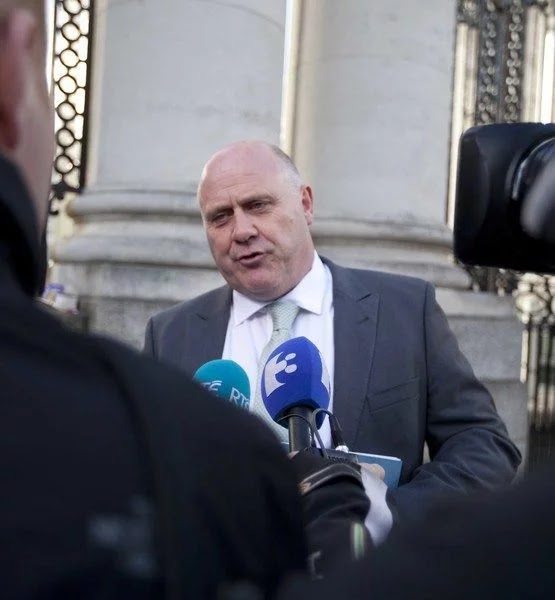

Noel Grealish TD has targeted immigrants and asylum-seekers 


Why bother blogging about the election?

After all, every fool seems to have an opinion, and nobody seems to want to pay for decent journalism these days.

Why bother writing about the old friend you met at Christmas who you rarely bump into any more?

He’s voting for Noel Grealish in the upcoming election, he said, because he “said what nobody else is saying”.

With a straight face, he told you that immigrants and asylum-seekers are to blame for nearly all our woes, but nobody else has the courage to say so.

Your friend has a business to run, a young family to feed, and spends hours stuck in traffic every day. Life’s a struggle, he said, and when he heard a local politician describe African migrants as “spongers” it seemed to really strike a chord.

My old friend doesn’t pay much attention to what goes on in the Dail. He doesn’t know that Noel Grealish has one of the worst speaking and attendance records in the Irish parliament or that he was exposed as one of the worst offenders for signing in, claiming travel and accommodation expenses, and failing to turn up for votes.

Or that he plucked figures about Nigerians from thin air before raising spurious questions about reparations in the Dail.

He’s too busy to pay attention, you see, but he bought into the atmosphere of intimidation, fear, and hatred whipped up by the prospect of a Direct Provision centre being located in a small Galway town last October.

Blaming the immigrants because you can’t buy a house or get a bed in a hospital allows him to find a scapegoat and feel better about himself, but does it offer a solution to our problems?

Scapegoating the most vulnerable and marginalised never tackles the cause of injustice or inequality, but it sure allows some people to find a target for their rage.


Why bother blogging about the health service?

Why bother writing about the 48 hours your late father spent lying on a trolley in a corridor after a fall in his house two years ago?

Dad was 93, a lifelong Fine Gael supporter who had worked hard for 45 years, when he suffered that fall.

Like thousands of others around the country, he lay in silence at University Hospital Galway for two full days and nights before being transferred to a ward.

It is hard to know exactly when the unacceptable became the norm, but the tendency of Irish people to just grin and bear it – and never complain – was very clear to me when I took two days off work to sit or stand by his side.

How could such an elderly man be left to lie for 48 hours in a brightly lit corridor with not a hope of privacy or confidentiality for such a long time? It felt like a war zone in that Emergency Department just down the road and I wondered what kind of Government could treat its most vulnerable citizens with such contempt.

My dad was lucky because he had a family member by his side, to provide him with an occasional glass of water, to look out for him, or just to ask what the heck was going as his wait for a bed and some comfort continued over two horrible nights.

All around me, other relatives were faced with the same ordeal. We shared each other’s agonies and frustrations. I had to stand for three hours without a chair as I paced up and down, feeling like a burden or an inconvenience on the nurses who seemed unable to cope with so many patients.

“If you treated an animal in the way the HSE (Health Service Executive) is treating patients you’d be up in court and rightly so,” a woman tweeted me in frustration, four months after her father died 36 hours after being admitted to an overcrowded public hospital.

I counted 18 trolleys occupied by patients in the corridor at any one time and I know the situation has deteriorated since then.

Almost 900 people were left lying on trolleys in January 2020.

What kind of heartless Government would allow this kind of situation to continue, to promote a “two-tier” health service which favours the rich?

What kind of canvassers would dare to come around to our houses to ask us to vote to keep the people responsible in power for another term?


Why bother blogging about the housing crisis? The students sleeping in hostels, or  sharing rooms with strangers, or sleeping in vans, or forced to clear out of their accommodation on Friday nights so that the landlord can get tourists in (and make bigger profits) at the weekends?

Why bother blogging about the domestic violence victims who opt to stay and be abused because the alternatives are unthinkable? Or the people you know in their 30s and 40s who have moved back in with elderly parents because they can’t afford the rents?

In a country which is supposed to be “booming” it’s amazing how many of us are just a monthly pay cheque or two away from living on the streets.


Why bother blogging about job insecurity?

Why write about the colleague you know who, at short notice, was given just one week’s work for the month of January? He still has the rent to pay and feels guilty each week when he has to share the bad news with his wife.

He won’t go on the dole, he tells me, because people on Social Welfare are “spongers” and it just wouldn’t feel right. So he suffers on with no money, hoping things will pick up, and the Government statistics will insist that he – like thousands of others – is gainfully employed in 2020.

So there’s an election coming up and the choice seems to be between Fine Gael and Fianna Fail, the two parties who have shared power between them since the foundation of the State.

When Fine Gaelers come canvassing will I be too polite to tell them the devastation their policies are causing in the provision of health care?

When the Fianna Failers knock on the door, will I thank them for being so greedy, bankrupting my country, and forcing many of my friends to seek new lives overseas.

Or will I do “the Irish thing” and smile and thank them for calling, because their dad used to play for Galway or they once managed to get a few workmen to fix the road outside my estate?

We vote for the same chancers time after time and then we are surprised when hospitals are overcrowded, houses are unaffordable, and there is no security in our jobs.

We vote for them again and again, and we expect the results to be different.

Yep, when there are false promises and appalling track records to be challenged, why bother blogging at all?


--  * A digital journalist based in Galway, Ireland, Ciaran Tierney won the Irish Current Affairs and Politics Blog of the Year award. Find him on Facebook  or Twitter here. Visit his website here - CiaranTierney.com

A meeting to oppose a Direct Provision centre in Oughterard


Monday, April 29, 2019

Is this the Ireland we really want?

Irish Current Affairs Blog of the Year 2018


The number of homeless people in Ireland has passed the 10,000 mark for the first time


A friend of mine is a volunteer coach with his local hurling club.

Like many parents all across Ireland, he only got involved with the GAA once his son began to play our national games, as he grew up many miles away, in another county.

He finds that he loves helping out at the sprawling rural club just outside the city, even though the early morning sessions can curtail his social life at the weekends.

On Saturday, I met him at a 50th birthday party.

He was bothered. He wanted to talk politics. He asked me why I wasn’t running for the local elections. And he voiced a question which I hear many people asking these days, in the midst of a so-called boom.

“Is this the kind of Ireland we really want?”

In recent weeks, he has discovered that a huge proportion of the families in his parish cannot afford helmets for their kids.

Faced with crippling mortgages, high rents, or insecure and low-paying jobs, many of the parents are living ‘hand to mouth’ every week and month. They hate to admit it publicly, but they confide in the coaches, privately, that they simply cannot afford new jerseys, helmets, or hurls.

An unexpected expense of €60 or €70 is simply beyond their means. And this is in a relatively affluent rural parish, just outside one of Ireland’s major cities.

It’s the kind of thing you would never hear An Taoiseach, Leo Varadkar, mention when he boasts about the Republic’s remarkable “recovery”. Most of these people are working, but they are the new working poor.

So many of them have confided in my friend and the other coaches that helmets and hurls are beyond them that the club has been forced to change its policy in relation to equipment for the youngsters.

Now, after a fundraising drive, each child is provided with a helmet.

Otherwise, their embarrassed parents would be unable to send them to the training sessions.


A child's hurling helmet is now too expensive for many struggling parents


Perhaps it’s a small thing.

But it has left my friend and the other coaches in shock.

In this “booming” Ireland, with such a low unemployment rate, how come so many people have so little money to spend every month?

How come an expense of €60 could cause a family emergency? Or force parents to withdraw their children from participating in the sport they love?

It’s a theme which seems to be popping up more and more. If this country really is in "recovery" how come so many people I meet every day are struggling to survive?

Campaigning is well underway for both the European and local elections and my friend is adamant that people like me (and him, I retort!) should get more involved in local or national politics.

The candidates we haven’t seen for half a decade are suddenly knocking on our doors, making promises, and calling on us to give them our votes.

Isn’t it time we asked them some pertinent questions?

Such as why so many working people are paying so much in rent or on their mortgages that they are literally broke by the end of every month.

Or why are so many of us working in insecure jobs, not knowing if we will earn enough to pay the bills next month?

The true level of poverty in our thriving cities is hidden away from view


Since taking voluntary redundancy from an industry which is in crisis, I have been shocked by how many people I have met who have next to no security in their jobs. A boss can tell them, at just a week’s notice, that there is no work for them and leave them short of money for the rent.

When populist European Parliament candidate Peter Casey generates front page headlines by criticising “freeloader immigrants” how come nobody asks him to direct his ire at “freeloader landlords” who hike the monthly rents up at every opportunity?

We should ask the candidates why so many people in their 20s and 30s are now in despair that they will never be able to own a home.

As rents spiral out of control, how come so many of us are earning so much less than we were a decade ago in the middle of this so-called “boom”?

How come so many people are sleeping on our streets or spending months on end in facilities provided by our homelessness charities?

How come a national emergency wasn’t declared when the number of homeless people in Ireland crossed the 10,000 mark for the first time?


Why is homelessness not a national emergency? 


A sober walk through Galway’s streets, where you can see desperate people lying in doorways on the coldest and wettest nights, would make anyone question how much this economy really is booming in 2019.

We should ask why poor people can be sent to jail for not paying their €160 TV licences while huge multinational corporations can avoid paying billions in taxes.

We should ask why the well-connected at the top of Irish society are still getting lucrative contracts from their friends in Government, even when some of them have cost us millions in tribunals and investigations.

We should ask why properties are being sold off to vulture funds while those of us scraping by on tiny incomes are forced to pay the deeply unpopular Universal Social Charge.


Financial struggles are causing unprecedented levels of stress


Of course, those on “zero hour contracts” or insecure, part-time jobs are still working, and off the live register, so our unemployment rate should be the envy of the world – if only it told the full story.

We should ask why old people like my father, in his 90s, have had to spend 48 hours lying on a trolley in one of our main public hospitals. Or why the Government funds a two-tier health system which allows the richest in our society to live longer, healthier lives.

Our ruling politicians never squirm with embarrassment when they write pleading letters to pop stars or turn up for the opening of private clinics which are built for a tiny fragment of the population.

As former Tanaiste Mary Harney once said, the Irish are “closer to Boston than Berlin” – that’s certainly true when you see how ordinary people suffer when they are forced to attend any of our overcrowded Emergency Departments.

This is the time to ask politicians if they are happy to live in a country, or support a Government party, where people stuck on trolleys for 24 or 48 hours are too afraid of the consequences to complain or speak out.

A candidate for the local or European elections might argue that they have nothing to do with our scandalous health service, but their parties are deliberately running down a broken system and forcing those who can barely afford it to cling on to private health care.

This is the right time to ask sitting City Councillors why some buildings lie empty while our homelessness crisis has spiralled out of control since they last knocked on our doors.

Or why they are threatening to spoil one of the most beautiful parts of my city in order to make way for a new road, at a time when a pending climate catastrophe and a growing obesity epidemic should be forcing all of us to abandon our over-reliance on cars.

In Galway and other Irish cities, it's all about the cars. 


Leave it to the charities?

They might tell us why our most senior city officials “sleep out” for charity every December when it’s actually their job - not that of the charity - to tackle the out of control rate of homelessness in our city.

But they smile for the cameras with the rich businessmen, because they have no concept of shame.

So many working people I know are fed up, living week-to-week, and literally unable to afford a child’s hurling helmet or a meal out at the weekend.

So many are afraid that they are just one month away from being made homeless by a greedy landlord or in terror of falling ill because our public hospitals are substandard.

Too many are struggling, too few are thriving or living off their backs, and yet if you were to believe these politicians Ireland is in the midst of a remarkable recovery after taking on so much of Europe's banking debt.

Ireland may be “booming” again, but only for the vultures, the bankers, the landlords, and the well-connected businessmen who, funnily enough, seem to be very close to the right wing parties who have divided up the ruling of this country since the foundation of the state.

As my friend put it so succinctly at the weekend . . . is this the Ireland we really want?


To hire a professional blogger / content writer, please email ciaran@ciarantierney.com


--  * Ciaran Tierney won the Irish Current Affairs and Politics Blog of the Year award at the Tramline, Dublin, in October 2018. Find him on Facebook  or Twitter here. Visit his website here - CiaranTierney.com. A former newspaper journalist, he is seeking new opportuniities in a digital world. 


Irish Current Affairs Blogger of the Year 2018


Friday, October 20, 2017

Lessons learned since taking redundancy

Just over three years ago, I found myself in a terrible place. The company I worked for was in serious difficulty, my industry in turmoil, and I was offered an opportunity which seemed like a poisoned chalice at the time. Voluntary redundancy? After more than 22 years in the newspaper industry, I was so fearful of change, even if there had always been a wanderlust and a desire to explore new horizons running through my adult life.                                                 
On my last day at work in the Connacht Tribune.

I had even taken a gap year in 2010 which opened me up to a whole new world. Diving in tropical waters off the coast of south-west Thailand or helping out at an educational project in Nicaragua provided wonderful experiences and rich spiritual rewards, but hardly offered the security and material comfort most human beings crave.

Our own history of famine, eviction, and emigration has given Irish people an understandable sense of anxiety about the need to forge out comfortable lifestyles – there are surely deep-rooted reasons for our obsession with the property market – and I found myself paralysed with fear as I stood at a crossroads in my life.

Three years ago, I wanted to run off and fight for social justice in a far-off corner of Central America. And yet I was gripped by a fear of leaving my family and friends behind. It’s amazing how scary freedom can be when it’s offered to you on a plate, as though life is somehow easier if you are chained to a 9 to 5 job and an all-too-familiar routine.

Three years on, I don’t claim to have all the answers or to have somehow, miraculously, found the meaning of life. And yet it has been a time of deep personal awakening which has forced me to re-evaluate what’s important in life.

Two weeks ago, I stood in Dublin at the Irish Blog of the Year awards and realised I had come so far without having a need to travel the world. I may not be making a fortune, but I feel I have learned so much.

Because too many of us can stay in unhappy or unrewarding situations for years or even decades, understandably so when there are mortgages to pay or children to feed, but it’s really sad when we let our lives by governed by a fear of change.

So here, for what it’s worth, are seven lessons learned since I took voluntary redundancy. Sometimes we don’t measure our lives for what they are really worth and winning second prize at the V by Very Irish Blog Awards is not really an important milestone in itself. But the award got me to ponder on what I’ve grasped since October 2014.


My V by Very blog award (Current Affairs)

Dignity is so important: Often we, as human beings, can be harder on ourselves than anyone else could possibly imagine. My first visit to a Social Welfare office after more than 22 years of working was a huge blow to the ego. As I sat in a lengthy queue, waiting for my number to come up, I wanted the ground to swallow me up. I was judging myself a failure for every second of every day, when I suddenly found myself out of work. I learned a lot during that seven months, the pain of unemployment compounded by a ‘superbug’ I picked up in the local hospital.

It was amazing to see some members of staff treat people as less than human beings. After waiting maybe two hours to see someone, perhaps to report that I’d managed to get a couple of days’ freelance work, it was demoralising to be faced with a scornful civil servant who seemed to look down on everyone they met on the other side of the barrier.

There are no votes in complaining about the length of queues at dole offices, but it would be nice to think people might realise that there are real human beings behind the statistics. I met some lovely people sitting in those endless queues and was struck by how infrequently we hear their stories on the national airwaves.  And, of course, dignity works both ways. It’s important to remember that the person on the other side of the window is a human being, too, even if some of them play the part of faceless bureaucrats far too well at times.

Friends and family are important: It’s a cliché, of course, but if you have a really busy life, as I had in the newspaper business, it can be very easy to take things – and especially people – for granted. In my wanderlust, in my desire for sunnier climes, I never really paid enough attention to the good things I already had in my life. The Irish story is very much one of heartbreak and emigration, but there are very good reasons for staying in your home town, village or city. Plus, teaching foreigners English on a part-time basis has given me a whole new appreciation for my city, when I view it through their eyes.

The people you grew up with are the people who will help you out most in your time of need, even if of course it can be great to take off on new adventures and meet a whole new circle of friends. I remember one call out of the blue, on a wet and windy January night, which really lifted my spirits at a time when I was really feeling blue and so uncertain about what was coming next in my life. That call was from somebody I have known all of my life.

So many people are struggling ... how often do we just walk by?

Learn to accept: I have a friend, a yoga teacher, who has a sign inside his isolated rural cottage which proclaims “Relax: nothing is under control”. So many of us cause ourselves so much suffering by trying to control the people or events which occur in our lives. When a former work-mate let me down recently, I took his stab in the back too much to heart. When I didn’t get a particular job, I might mull on it for weeks. Acceptance is key to a happy life. We sometimes forget that we are all going to die and that we should just make the most of our time on this planet, rather than getting caught up in ego-driven disputes and dramas. It’s not what happens to us, but how we deal with events, that counts.

Don’t isolate yourself: Hours spent on Facebook are no substitute for a cup of tea and a chat shared with a good friend. The sudden blow of finding myself out of work was reduced when I would arrange to meet a friend to catch a movie or a football game. I soon realised that friends were going through, or had gone through, similar experiences to me, but perhaps I had not paid enough attention to them because I had such a busy life. A chat in the sauna in my local gym, at the end of a fruitless day job-hunting, might have meant an awful lot more to me than the person I was talking to realised.               
"Life is so much wiser and kinder than
your mind imagines" - Mooji

So many people are struggling: When you take a huge cut in income, when you get out and have really meaningful conversations with people, you soon realise that so many people are struggling to make ends meet. You take a bus instead of a taxi and you find yourself deep in conversation with a person on the margins. You take a ‘zero hours’ contract job and marvel at the people bringing up families on tiny incomes.

You stop and chat to the homeless person on Shop Street and realise he is a real human being who has experienced real suffering and, there but for the grace of God, you could be in his exact situation if you had been thrown the same roll of the dice. I haven’t had a drink for almost a year and my city looks an awful lot different late at night when viewed through sober eyes.

Look after your mental health: Do whatever it takes to relax, treat yourself, and overcome those fearful, negative thoughts. For me, a meditation group gave real solace in the midst of a personal crisis. A weekly yoga class allows me to switch off, forget my problems, and perhaps have a giggle with some people I hardly know.

A swim in the pool or a walk on the Salthill promenade on a winter’s night is far better than lying on the couch, obsessing over what might have been or the uncertainty of what will come next in this crazy adventure called life. If you look after your body and your mind, the problems which seemed insurmountable a week or a month ago suddenly pale into insignificance and perhaps you can even learn to wake up with a smile on your face and to appreciate all the good things in your life.

‘Career’ is not everything: It takes courage, or perhaps madness, to say goodbye to a job or a career you have had for more than two decades. Even if that career is in terminal decline. But the happiest people I have met don’t drive BMWs, golf in the best clubs, or wear a shirt and tie to work. They may be teaching refugees English, helping out in a Direct Provision centre, or running educational projects in some of the poorest places on earth.

A great quote I disovered in the wilds
of Connemara last year
Some of us spend so much energy trying to get to the top of our chosen fields, we never stop to take stock, to see if that is what really makes us tick or happy with life. My city has a reputation as the “graveyard of ambition”, but that could be a good thing, too. Life is about so much more than promotions, bank balances, or getting one over your colleagues in a mad dash to the top.

Some of the happiest people I’ve met are surviving on $2 a day in the poorest neighbourhoods of Nicaragua and it’s easy to forget that if you spend your life judging yourself, or comparing yourself to the people around you.

Life never was meant to be a competition or a race, but it’s easy to forget that when we get caught up in the “politics” of a particular career. It must be awful to spend your life rushing to get to the top of the ladder, only to realise you never wanted to climb that particular ladder in the first place!


Please check out my business website, if you would like to hire a blogger / content writer: http://ciarantierney.com/

Find Ciaran Tierney on Twitter, https://twitter.com/ciarantierney

Find Ciaran on Facebook: http://facebook.com/ciarantierneymedia

Thursday, January 5, 2017

A bluffer's guide to an eventful 2017

Check out my Facebook business page


For many people I know, 2016 was a horrible year.

Too many faced job insecurities or even job losses, relationship breakdowns, and financial worries about the future. Many felt they were only a pay cheque away from homelessness, with rents increasing and the prospect of buying a home in Ireland becoming ever more remote for an entire generation.

The crisis in our health service left far too many vulnerable people lying on trollies and all across the globe thousands of people lost their lives in appalling wars.              
The Donald: set to make a big impact in 2017

We saw many of our musical heroes pass away, while the Brexit and Trump votes seemed to suggest that hatred and fear had overcome love and understanding on both sides of the Atlantic.

People began to wake up to the appalling reality of climate change, only to realize that a man who completely denies the reality of pending environmental catastrophe had become the most powerful politician on the planet late in the year.

But the start of January is a time for renewal and change, and perhaps looking forward to a brighter future.

When I used to work in the newspaper business, I often wrote my predictions for the New Year.

So, for what it’s worth, here’s my tongue-in-cheek assessment of what 2017 has in store.

JANUARY
The Irish Times publishes a piece called ‘Why fascism is trendy again’ on the eve of the inauguration of US President Donald Trump in Washington DC. The event itself proves to be something of a damp squid, as Mexicans, Muslims, women, gays, gun-owners and liberals are banned from the ceremony. The only two foreign leaders to attend are from Holland and Northern Ireland, after Trump insists it’s an “orange only” event.

An Taoiseach Enda Kenny: our own wonderful leader

FEBRUARY
With an unprecedented number of patients on trolleys in Ireland’s public hospitals, An Taoiseach Enda Kenny is accused of gross hypocrisy when he takes a private jet to the United States for emergency heart surgery.

However, the emergency is quickly forgotten as a team of surgeons at a highly rated private clinic in New York fail to find his vital organ. Following his release from hospital, an emotional Mr Kenny calls on President Trump to give an amnesty to the “undocumented” Irish in the US who were unable to go home for Christmas.

MARCH
After returning to Ireland, Mr Kenny calls for an immediate clampdown on “illegal” immigration to Ireland. “This might be the best little country in the world to do business in, but our small island hasn’t got room for all these niggers,” he tells a Fine Gael function in his native Castlebar. After a reporter from the Mayo Gazette secretly records his speech, he accuses the media of lacking a sense of humour and promises to sell the Gazette to his close friend, Denis O’Brien.

Trump, meanwhile, pledges $100 billion in military aid to Israel, on his first overseas trip since taking office. “It’s simply inhumane to expect Israelis to live on just 78% of Palestinian land,” he says. “I’m very strong on Israel. I’m so strong on Israel, in fact, that I’m gonna kick the UN out of New York for daring to question their policies. I’m gonna make Israel great again.”

APRIL
Niamh Horan of the Sunday Independent courts controversy by organising a five page “Fascism is Fashionable” feature, with photo shoots of columnists Ian O’Doherty and Brendan O’Connor dressed up in Ku Klux Klan costumes. Controversy rages over the lack of security at Dublin Airport when UK columnist Katie Hopkins disguises herself as a cockroach when flying in for the feature.

Amazingly, security and customs personnel failed to notice any difference and waved Ms Hopkins through without even looking at her passport.

Is this Katie or a cockroach? Who knows?

MAY
Shannon Airport is in the news this month when management celebrate the arrival of the 5 millionth US soldier at the ‘neutral’ facility. A proposed party to welcome the soldier, on his way home from Iraq, has to be cancelled when white phosphorous is released from his plane, causing the deaths of 48 Ryanair passengers on their way to London.

Thankfully, no US soldiers were injured in the accident. And Michael O’Leary was presented with an Irish business innovation award when he managed to have his plane back in the air within four hours of the incident.

JUNE
Billionaire tycoon Denis O’Brien commissions a report which finds that Rupert Murdoch of News International has too much influence on the Irish media. By complete coincidence, Murdoch’s Sunday Times commissions a report which finds that O’Brien has too much influence on the Irish media.

O’Brien buys up every remaining regional newspaper in Ireland, while Murdoch purchases all of the country’s “independent” radio stations. New Minister for Communications Michael Lowry expresses complete satisfaction with both deals.

JULY
The five million Native Americans in the US are baffled when President Trump warns them that they will be deported “along with all the Mexicans and Muslims”. A new “Orange Lives Matter” movement is born in the USA to counteract vicious lies about police brutality and Guantanamo Bay in Cuba begins to fill up with environmental scientists after the phrase “climate change” is banned by the US Congress.

AUGUST
Tax exile Bono becomes Freeman of the City after spending three nights “sleeping out” on Grafton Street in Dublin to raise awareness of homelessness. However, he calls the Gardai when a real live homeless person turns up at his occasional Dalkey home. Later in the month, he’s presented with an award for services to humanity by UN Secretary General Ivanka Trump.

“Every day, the poor people of Africa must thank their lucky stars that they have a brilliant, billionaire Irish singer to speak out on their behalf,” she said at the award ceremony at Trump Tower Two, the new name for the UN HQ in New York. Back home, Ireland becomes the first country in Europe to successfully sue the EU in order to make sure that it did not get money owed to it.

Taoiseach Kenny says he’s delighted he won’t have to take €17 billion in taxes owed by Apple Inc, as it would do “enormous damage” to Ireland’s reputation as a great little country to do business in.


SEPTEMBER
Fears that RTE would have to go into liquidation due to financial difficulties are allayed when TV presenter Ryan Tubridy agrees to take a five per cent pay cut. Mayo win the All-Ireland football final (sorry …. That bit is made up!), no, actually, Dublin and Kilkenny win the football and hurling respectively. Hurling fans all over the country come together to hire Dublin drugs gang the Keenihans to ‘take out’ Kilkenny boss Brian Cody.

RTE are faced by a flood of complaints when crime journalist Paul Williams appears on the ‘Late Late Show’ for the 50th time, but lets his fans down badly by failing to utter the word “scumbag” once during his 45 minute appearance with Ryan Tubridy.

OCTOBER
Gardai issue an apology after a banker is arrested for drunk driving. An Taoiseach Enda Kenny summons the Garda Commissioner to his office to remind her that no banker is to be arrested for any offence, ever. The Government announces that Irish Water is to be revived and advertises for a new CEO, to be paid €400,000 per year. A demonstration against Irish Water attracts 30,000 people to the streets of the capital, but organisers claim that 100,000 took part and Gardai deny that it even happened.

Promises, promises ... but sure they're only promises!

NOVEMBER
The Prime Minister of Israel, Benjamin Netyanahu, is awarded the highly prestigious Tipperary Peace Prize. Human rights organisations condemn the prize, pointing out that Israeli soldiers have killed 1,500 people so far in 2017. A spokesman for the committee, Alan Kelly, says that this is a big decrease on the 2016 figure.

“And, anyway, sure, he’ll bring a crowd and he’ll give us a bit of publicity,” say Kelly.

Russian jets bomb 85 civilians to death in Syria on the same day as US fighters murder 85 civilians in Iraq. RT provide excellent coverage of the Iraqi deaths, but say those in Syria never happened. Fox News, now allowed 24/7 access to the White House for a new series called ‘The Don Knows Best’, accuse RT of “fake news” and call for the Russian TV channel to be banned from America.

“Unlike all the others, Fox gets it,” says Trump.

DECEMBER
A visit by US President Donald Trump to China turns controversial when the Chinese hosts fail to place a giant mirror in his Shanghai hotel bedroom. Enraged, Trump returns to Washington DC, where he presses the red button to blow the Chinese … and the rest of us … to Armageddon.

So ... that's the coming year for you.

It’s going to be a lot more eventful than 2016.

Happy New Year!


http://ciarantierney.com/

From the archives: An Uncomfortable Truth for Culture Night

Tuesday, November 8, 2016

Lessons learned from a local legend

Find me on Facebook

The Buzzcocks played a storming set at the Roisin Dubh on Thursday night. The place was packed, it was great to see a full house for a visit by veteran punk rockers to a Galway venue, and there was a real sense of nostalgia in the air.

But there was one face missing from the crowd. I kept glancing over to the top corner, to the left side of the stage, where I expected to see a man in a trademark hat, festooned in badges, wearing a trench coat, bopping around. He always seemed to be in that corner for a gig like this, immersing himself in the music, seemingly without a care in the world.
On top of the world: Mark Kennedy
climbing Croagh Patrick in Co Mayo
                 
When you met Mark Kennedy at a punk or metal concert in the Roisin Dubh or Sally Long’s, he would never cease to inspire.

He showed people much younger than him that it’s possible to have a great time without alcohol and that you should never feel too old to lose yourself for an hour in punk, ska, or metal mayhem.

For me, Mark – who passed away last week – was an admirable figure. He was cranky and cantankerous, but he got things done, enjoyed a good laugh, and had a heart of gold.

I used to think I was one of the oldest rockers in Galway when I’d join the wonderful lunacy at a concert by the likes of Belfast band And So I Watch You From Afar and then I’d see Mark, 30 years my senior, going absolutely mental over in the corner to their guitar-driven fury.

If ever a man disproved the theory that Irish people tend to become boring or conservative or lose their sense of adventure once they pass 40, it was the late Mark Kennedy.
He taught me (and many others) some really valuable lessons for life.

Here are just a few of them . . .

You can turn your life around: When I first met Mark, he was homeless and drinking every day on the streets of Galway. He used to bed down for the night in shop doorways or down behind the railway station and his situation was all the more tragic because I knew he had a family and an amazing story to tell.

Not many Galwaymen earned a living writing for the stars in Hollywood in the 1960s and not many Hollywood writers would have survived a few winters on the streets in my wet and windy native city.

I had managed to secure a job as a reporter on the local ‘paper in 1992 and regularly met Mark and his colleague, Niall Rivers, as they made a documentary in which they chronicled how the homeless were being marginalised in favour of big business in our native city. They called the video ‘Clear the Streets’.

They weren’t the most professional film-makers, but they highlighted a side of Galway which never made it into the tourist brochures. They gave voices to people who were seen as nothing more than an inconvenience by the ‘powers that be’ in the city.

Homelessness in Galway, November 2016
Mark and Niall were before their time in recognising how ordinary people were of little importance compared to profit in the minds of many businesses and those who ran local government at the time.

After five years of living on the streets, Mark was a wreck. And then, one night, he had an epiphany. Finding himself alone next to St Nicholas’ Cathedral, he put down a bottle of tonic wine and swore he would never drink again.

He completely turned his life around, becoming a campaigner for the elderly, the homeless, and emigrants in Ireland.

In an interview with me last year, he recalled putting down his final bottle of Buckfast at Church Lane in 1992, the horrible depression which followed over the next two years; and the slow process of putting his life back together, and finding a home.

“I never made the mistake of isolating myself. I knew I had to get up and go out and walk and meet people. Be around people. It’s the kindness and goodness of people who, even if you have lost faith in yourself, they haven’t lost faith in you,” he said.

For those of us lucky enough to know Mark in more recent years – and the demons he had dealt with in the 1990s – it was uplifting to see how comfortable and happy he was in his Renmore home. He used to thank God every day that he had a lovely, warm home.

“The little kindnesses you get from people more than make up for sleeping in a doorway and shivering your nuts off and ending up in the hospital,” he told me. “Killing yourself with drink is not actually an adequate response to a hypocritical society.”

You can rage against the machine: Why lose your sense of idealism just because you get older? If you protest against injustice when you are 17, why shouldn’t you when you are 70?

Mark shared my sense of anger at the injustice and inequality which is at the heart of Irish society. Instead of trying to kill himself with booze, he grew old brilliantly – fighting for the right of pensioners to serve on juries, highlighting the appalling level of homelessness in Galway, and getting a reluctant city to build a fitting memorial to those who lost their lives in the Great Famine.

When Mark found out that people aged over 65 were not allowed to serve on juries, he had the balls to ask why and to start a nationwide campaign. When old people marched for greater recognition across the country in 2008, it was fitting that Mark was one of the leading lights for campaign group Age Action.

He loved black humour, too, such as when one of the “ould stock” – as he used to refer to older Galwegians – gave him a right good telling off after being disgusted by a call-up for jury duty. The old fellow told Mark he should have left well enough alone.

If anything, the homelessness situation in Ireland in 2016 is far worse than when he made ‘Clear The Streets’ in 1992.

Mark and Niall Rivers predicted the bank ‘bailout’, the logical conclusion of a capitalist system in which ordinary people became mere fodder for a tiny elite. Once he sobered up, and got a decent place to live, Mark became a force for good in his native city. He has left a lasting legacy in the form of the wonderful Celia Griffin Memorial Park, which opened in 2012.

Celia, a six year old girl from the Claddagh, died in the Great Famine. Many Galway people would prefer to forget this awful period in their county’s history, but Mark shone a light on issues others just wanted to ignore.

He reminded us that so many people from our region set sail for the Americas in the ‘Coffin Ships’ in the 1840s, when they barely had enough money for the passage to America and knew they’d never be able to come home.

He knew all about the pain of forced emigration, because he had been an emigrant himself when Galway offered no opportunities to a young man from working-class Bohermore in the 1950s. On his travels in the UK and USA, he met many impoverished Irish people who had been scarred by their childhoods back home.

The Celia Griffin Memorial Park in Salthill:
Mark's wonderful legacy to his native city
Why should you act your age? In Galway, people tend to become very sensible once they pass a certain age. If you loved heavy metal as a youngster, you are supposed to eventually learn to sit at home and leave all the fun of a live gig to the young ones. Not Mark Kennedy, though.

He didn’t care too much about what anyone thought of him. If he wanted to go to a punk or a metal gig, he didn’t care if he was the oldest person in the pub or club. His love of metal in particular meant that he had a wonderful circle of younger friends from attending gigs at venues such as Sally Long’s and the Roisin Dubh.

Sometimes we can forget that life is for living. Mark, who conquered the demon drink after five years on the streets of Galway, showed us how you can never be too old to have a good time. He also showed it’s possible to go out and have fun without alcohol, which can seem almost impossible in Ireland at times.

He loved gathering friends around him and his birthday became a wonderful annual pilgrimage to Croagh Patrick, the holiest (and most spiritual) place in the West of Ireland, over the past nine years.
If Mark could touch the sky from the top of the mountain until he was well into his 70s, he appreciated the pilgrimage all the more because he had reached rock bottom at a different stage in his life.

“I had five winters on the streets of Galway. I knew that if I had another winter I was dead. There was no question about it, but I came to see that, in a way, I had to be in a place where I had nothing left to lose.”

May he Rest in Peace.

Reaching the stars at the holiest place in the West of Ireland

Thanks to William Geraghty of Galway Video News for filming my interview with the late Mark Kennedy.


Find me on Twitter https://twitter.com/ciarantierney

Thursday, September 15, 2016

They don't want you to wake up!


In my country, they don’t want you to wake up right now.

They don’t want you to ask why a single mother can be sent to jail for not paying her €160 TV licence while one of the biggest corporations in the world, Apple Inc, can get away with not paying over €13 billion in unpaid taxes.

Not only that, our Government is fighting for Apple's right not to pay tax which is owed to the very same Government – and is prepared to take on the European Commission to do so.

They don’t want you to ask why the hard-pressed Irish taxpayer was forced to take on 42% of Europe’s banking debt.                                                                
Burying Irish Water at a protest in Galway

When pressed about this gross injustice, our Government told us that we had to do it because the European authorities said so.

These are the same European authorities we are now fighting tooth and nail to make sure we don’t get the €13 billion-plus windfall.

They don’t want you to ask why we kept getting so many threatening letters, informing us that we had to pay for a new private company called Irish Water.

Most of us were very happy with the way in which our local authorities looked after our water needs.

And we hated the thought that a tiny elite of select individuals could make a "killing" from this precious resource in one of the wettest countries on the planet.

These letters, thankfully discontinued or suspended, kept piling up while the head of Irish Water was getting a nice €300,000 “golden handshake”.

And this at a time when there were such serious questions about the awarding of contracts to those who installed meters in housing estates across the country.

They don’t want you to question how up to a dozen Gardai could miraculously appear to “protect” the water meter installers in our estates.

This, at a time when we are told that Garda resources are stretched to the limit and there is “open warfare” among criminal gangs in Dublin.

They don’t want you to ask why so many greedy speculators were rescued, why bankers on massive bonuses never had to pay for their misdeeds, or why the National Asset Management Agency (NAMA) was allowed to lose €223.5m of taxpayers’ money from the sale of its loans portfolio in Northern Ireland.

A water protester who tries to prevent a meter from being installed outside his home can be threatened with jail, but a NAMA executive who grossly undervalues property which was bought with the State’s money is only doing his job.

They don’t want you to ask why people who are scraping a living in unsecure jobs are forced to pay the deeply unpopular Universal Social Charge, while senior executives working on “our” behalf can seemingly make corrupt or secret payments to businessmen and politicians.

Nobody marched when the International Monetary Fund (IMF) and the European Central Bank came to Dublin to “bail us out” in 2010, or when the property tax was invented in order to pay off the debts incurred by the toxic banks.

They waited until the formation of Irish Water to take to the streets, not because it was the biggest issue the country faced but because they viewed a sickening quango as the final straw.

And then they were demonised.

They don’t want you to ask why there is a homelessness crisis and a surge in rental prices at a time when there are so many empty properties all across the State.

Or why a single mum living in a hotel for a year can be demonised by sections of the media, because she refuses to take up an offer of a rental home which has no long-term security for her and her daughter.

In my city this week, homelessness charity COPE reported a 23 per cent increase in the number of families who became homeless in Galway last year.

That’s 56 families, including 133 children, who had no place to call their own and had to rely on emergency accommodation in 2015.

Yet if people on the housing list are offered accommodation from a private landlord they can lose their place on the lengthy waiting list and find themselves homeless again in a year or two.

They don’t want you to ask why the corridors in A&E departments have been divided into lettered “zones” because it is now so normal for people to spend entire nights lying on trolleys in our public hospitals.

It’s easier to find your elderly relative if you have been told their trolley is in zone Z of the corridor.

And it’s pretty hard to kick up a fuss about the conditions in the Emergency Department if you are waiting for hours or even days for a bed in a ward.

They don’t want you to ask why millions of euros were spent on security in order to bring gas ashore in North Mayo, in a part of the world where oil and gas companies were shocked by the low tax rates imposed by the Irish Government.

Or to ask why “supertrawlers” trawl Irish coastal waters, while small fishermen on our off-shore islands find fishing limits so restrictive that they are better off leaving their boats at home in the harbours.

NAMA: the subject of a new Irish scandal
They don’t want you to ask why there are such “sweeteners” for multi-nationals while small local businesses can struggle to get off the ground.

Or why asylum seekers have to spend years living under the inhumane Direct Provision system in the country where the pain of forced exile should be more familiar than virtually anywhere else on earth.

Or why US military men can pass with impunity through a civilian airport, perhaps even renditioning prisoners illegally or carrying weapons of mass destruction, in a country which has been “neutral” for decades.

For 15 years now, Shannon Airport has played a key role in the global “War on Terror”, while the security firm which patrols my local University campus has had a presence in Israeli prisons for years.

G4S are due to pull out of Israel within the coming year, but their presence in so many countries across the world shows how “interconnected” we all are these days.

A lot of people I know are fed up with zero hours contracts, an inequitable tax system, the privatization of water, and the preferential treatment which bankers and businessmen seemed to receive in the wake of the economic crash.

Yet when people speak up about austerity, and attend a march, they are labelled as the “Sinister Fringe”.

Even though they realize that our entire society is built on injustice and inequality; and the system is rotten to the core.

Sometimes it seems as though the Government is running scared. And, yes, they don’t want us to wake up!


For journalism work, social media strategies, content writing, 'ghost' blogging, or public relations, contact Ciaran at ciaran@ciarantierney.com


Find me on twitter, @ciarantierney

http://ciarantierney.com/